


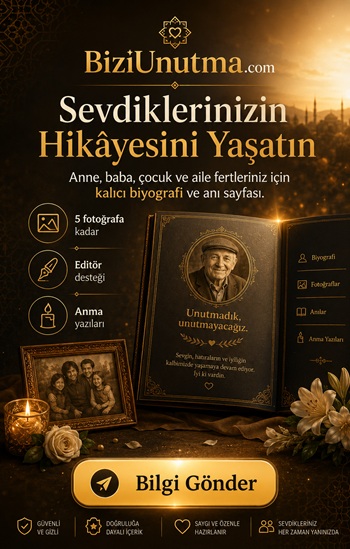
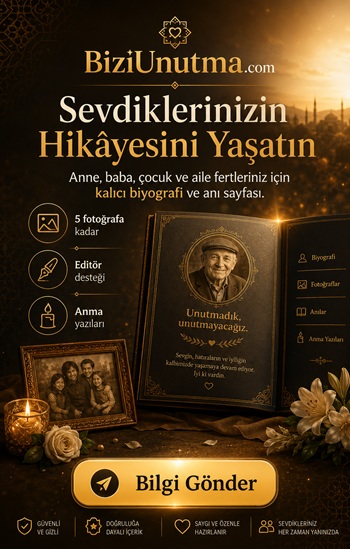
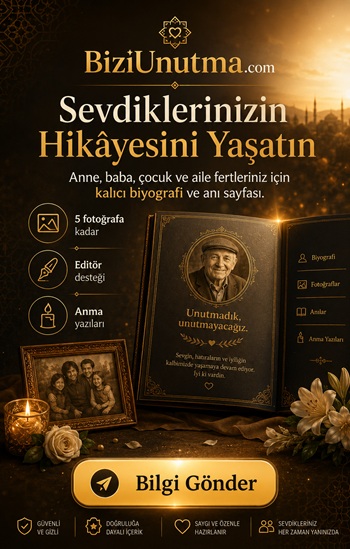
BiziUnutma.com creates digital life stories from family memories
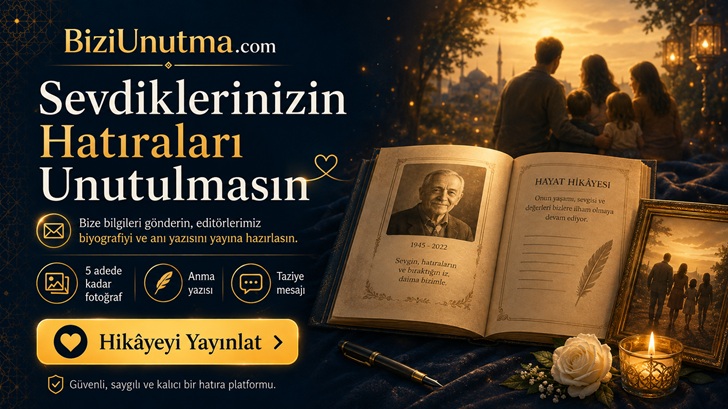
BiziUnutma.com invites families to submit memories, photographs and biographical details about loved ones who have passed away.
By Bilge Türk | MediCenterTV
ANKARA, TÜRKİYE — BiziUnutma.com is inviting families to submit photographs, memories and biographical details about loved ones who have passed away, turning scattered family records into carefully edited digital life stories.
The Türkiye-based platform, whose name means “Do not forget us,” provides space for biographies, remembrance articles, personal letters and stories about people who may never have appeared in public records or the media.
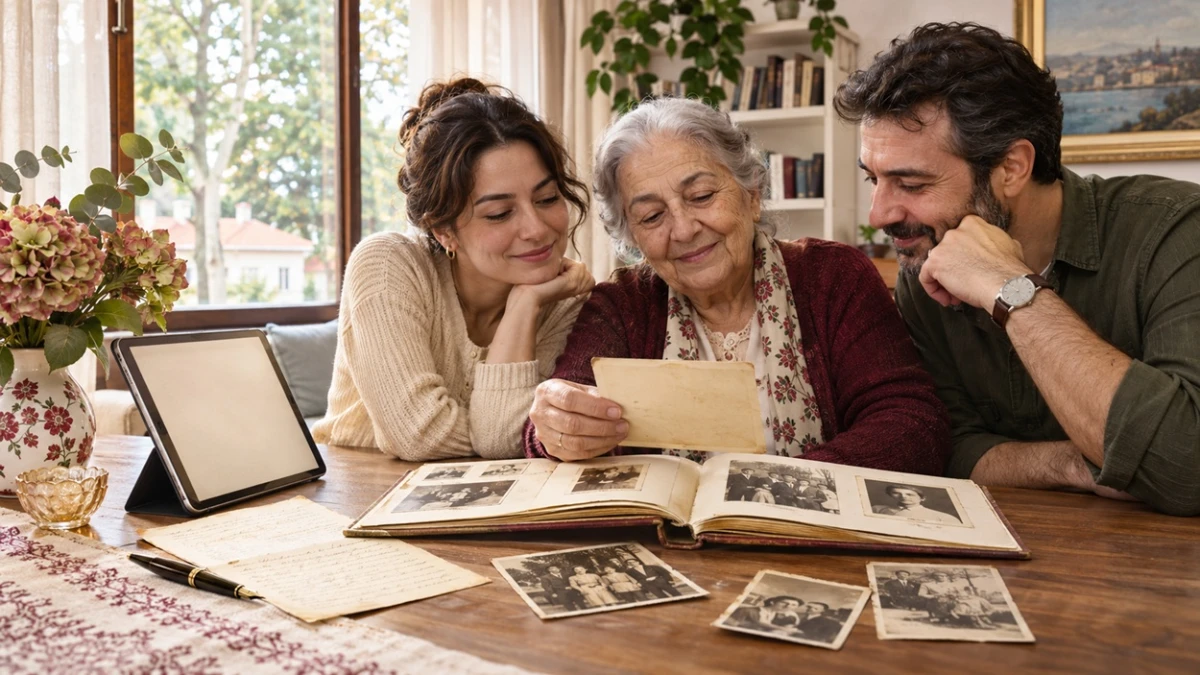
Families do not need to produce a professionally written biography. They can submit short notes, dates, memories and photographs, which are then reviewed and organized by editors into a coherent account of the person’s life.

A digital legacy beyond social media
Photographs and remembrance messages are frequently shared on social media after someone dies. Although these posts may reach relatives and friends quickly, they can become difficult to find as new content fills people’s timelines.
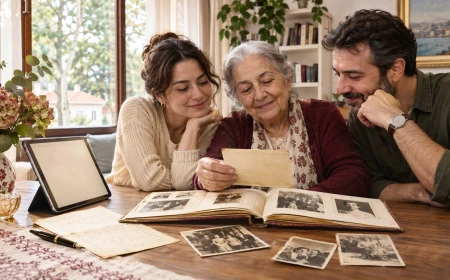
Family photographs may also remain stored on old phones, computers or external drives. Printed photographs can be divided among different relatives, while letters, certificates and handwritten notes may be lost during house moves or changes between generations.
BiziUnutma.com aims to bring these materials together on a dedicated page created for the person being remembered. Families can then share the page with relatives and friends through messaging applications and social networks.

The platform says its purpose is not limited to recording dates and occupations. Personal characteristics, family memories, frequently repeated sayings and the influence the individual had on others can also become part of the story.
People do not need to be famous to be remembered
Published biographies often focus on political leaders, artists, academics, business figures and other people already known to the public. Most lives, however, are remembered primarily within families and local communities.
A mother who held her family together, a father who worked for his children’s future, a teacher who influenced generations of students or a neighbour remembered for helping others may leave a lasting legacy without becoming publicly known.
The project therefore accepts applications concerning people from different professions, social backgrounds and regions. Public recognition, an official title or a prominent career is not required.
The resulting story may include:
- Full name
- Place and date of birth
- Date and place of death
- Parents, spouse, children and close relatives
- Childhood and early life
- Education
- Profession and working life
- Cities and countries where the person lived
- Public, military or community service
- Important achievements
- Interests and personal qualities
- Memories shared by relatives and friends
- Phrases or sayings associated with the person
- Contributions to family and community life
Families are not required to provide every detail. Editors work with the information that can reasonably be confirmed, while missing sections are not completed through speculation.
Family memories can connect generations across borders
Family history can become fragmented when children and grandchildren move to different cities or countries. One relative may keep the photographs, another may remember the dates, while someone else may know stories from childhood or working life.
Bringing these accounts together can help younger family members understand people they never had the opportunity to meet. It can also preserve information about migration, occupations, neighbourhood life and family traditions.
This can be particularly relevant for families whose members live in several countries. A digital page allows relatives in different locations to read the same story and contribute corrections or additional information.
A life story can therefore serve not only as a memorial but also as a family record. It may help future generations understand where their family came from and which experiences shaped earlier generations.
A person’s life cannot be reduced to dates alone; it also continues through the memories carried by family and friends.
Two forms of remembrance are available
BiziUnutma.com offers two main types of content for people who have passed away.
The first is a biographical life story. This format brings together the person’s background, education, profession, family life, achievements, personal qualities and important memories.
The second appears under the platform’s “Ardından,” or “After Their Passing,” section. It is intended for more personal writing, including farewell letters, expressions of gratitude and memories of a particular moment.
A daughter or son may write to a parent, a spouse may address a life partner, or a friend may describe a memory that remained important for many years.
These texts do not need to cover the person’s entire life. A few paragraphs about an unfinished farewell, an unspoken thank-you or a meaningful family memory can be submitted for editorial consideration.
People who have already written their text can send it directly. Those who find it difficult to organize their thoughts may instead provide short answers or notes from which the editors can prepare a draft.
The service is editorial and commemorative in nature. It is not psychological treatment or bereavement counselling and should not be regarded as a substitute for professional mental health support when such support is needed.
Photographs form part of the family record
Applicants may submit up to five photographs for use with a life story or remembrance article.
These may include portraits as well as photographs from childhood, education, military service, weddings, family gatherings or working life. Images with a clear connection to the story are selected for the dedicated page.
The platform recommends submitting the clearest and highest-resolution versions available. Poorly lit, heavily damaged or very small images may not display well online.
Applicants must have the right to share and publish the photographs they submit. When living people appear in an image, obtaining any necessary permission is the responsibility of the applicant.
Additional care is taken with photographs involving children, health information or private family situations. Images taken from websites, newspapers or social media may not be used when their publication rights cannot be established.
Applications are reviewed before publication
Life stories and remembrance texts are accepted for free editorial review. Submitting material does not guarantee that it will be published.
Editors may request clarification, further information, supporting documents or permission from family members. Names, dates and important relationships may also be checked with the applicant before publication.
Content is assessed according to several principles:
- Reasonable factual accuracy
- Respect for privacy
- Protection of personal rights
- Appropriate permission for text and photographs
- Respectful treatment of the person’s memory
- Compliance with editorial and legal standards
Unverified serious allegations, insults, discriminatory statements, private family disputes and information that could violate the rights of living people are not published.
If an application is submitted by someone outside the immediate family or close circle, the platform may request authorization from a family member or another relevant rights holder.
Contact details supplied with an application are used for editorial communication and are not included in the published story without consent.
How families can submit a life story
Applicants should provide their own name and contact details, explain their relationship to the deceased person and send the information they would like to have considered.
The application may include biographical notes, family memories, photographs and the name that should appear beneath the published story.
Families seeking further information can visit BiziUnutma.com’s “Keep Their Memory Alive” application page.
Email: bilgi@biziunutma.com
Telephone / WhatsApp: +90 536 648 52 56
Approved stories are published on a dedicated page that can be shared with relatives, friends and future generations.
MediCenterTV.com
Ne Düşünüyorsun?
 Harika
0
 Kötü
0
 Bayıldım
0
 Güldüm
0
 Şaşırdım
0
 Üzüldüm
0
 Kızdım
0

Bilge Türk, MediCenterTV.com editörü, gazeteci ve yazardır. Sağlık, yaşam, bilim ve güncel gelişmeler üzerine içerikler hazırlayan Türk; doğru, anlaşılır ve toplum yararını gözeten habercilik anlayışıyla sağlık alanındaki gelişmeleri okuyuculara aktarmayı amaçlamaktadır.











Yorumlar (0)