



Could Humans Really Live to 150? Experts Say Asia May Take the First Leap
Experts say living to 150 may be plausible within the next 50 years as gene editing, senolytics and tissue regeneration mature—likely with first applications in Asia’s faster regulatory landscape.



Could Humans Really Live to 150? Experts Say Asia May Take the First Leap
MEDICENTER TV / ISTANBUL, TÜRKİYE
From Sci-Fi to Science: The New Longevity Race
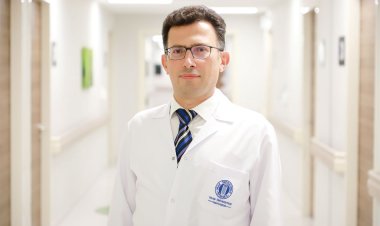
A widely discussed exchange between Russia’s Vladimir Putin and China’s Xi Jinping about “extending life” has reignited a global debate: can the human lifespan reach 150 years? According to Prof. Dr. Kaan Yılancıoğlu, a molecular biologist and geneticist at Üsküdar University, the idea is no longer confined to science fiction. “Average life expectancy has already climbed from the 50s–60s to the 80s over the past seven decades,” he notes, adding that advances in biotechnology, genetics and organ resilience support a serious scientific discussion about pushing human life far beyond current limits.
Longevity’s Pivot: Not Just Longer—Healthier
Today’s frontier is less about simply adding years and more about protecting brain, heart and cellular health while doing so. The focus of longevity science is to preserve function, independence and quality of life. That shift spans early screening, precision prevention, nutrition and exercise programs, and non-pharmacological interventions—combined with data-driven monitoring of biomarkers. The goal: extend “healthspan,” not just lifespan.
The Limits of Transplants—and the Promise of Regeneration
Organ transplantation can buy time, but it is not a durable path to radical lifespan extension. Long-term immunosuppression raises infection risks, creating a ceiling on what transplants alone can achieve. Researchers are instead zeroing in on senolytics (molecules that target aging cells), tissue regeneration, and induced pluripotent stem cell (iPS) technologies. In a not-so-distant scenario, a patient’s own cells could be used to grow replacement tissues and organs, minimizing rejection and reducing dependency on donor organs. In parallel, xenotransplantation—using genetically edited animals to produce human-compatible organs—is approaching clinical thresholds as scientists delete proteins that trigger immune attack.
Why Asia Could Move First
Prof. Yılancıoğlu argues that the first real-world demonstrations of radical life extension may surface in Asia rather than the West. The reason: regulatory velocity. Western systems are typically stricter and slower, whereas parts of Asia are more permissive to trial novel biomedical interventions—an environment that previously enabled landmark, if controversial, gene-editing milestones. That asymmetry could translate into earlier piloting of high-risk, high-reward longevity approaches in countries like China, with global ethics and safety debates quickly following.


Timelines: 2030 Is Too Soon—Think in Decades
Could babies born today see the era of 150-year lifespans? “2030 is too early,” the professor cautions. Pushing average life expectancy into the 90s may be realistic in the nearer term, but getting to 150 likely requires several decades. Breakthroughs in gene editing—CRISPR and prime editing—are poised to make the largest impact by correcting harmful mutations and modifying aging pathways. Yet healthcare’s safety-first culture means translation from lab to clinic can take 5–15 years per therapy, stretching the horizon to roughly half a century for genuinely transformative results.
Speed vs. Safety: AI Hype Meets Medical Reality
Artificial intelligence can iterate at breakneck speed because its regulatory guardrails are still evolving. Medicine is different. Ethics boards, phased clinical trials and pharmacovigilance are intentional brakes that protect patients. That deliberate pace is not a bug but a feature—ensuring that longevity innovations are both effective and safe when they finally reach the bedside.


 Like
0
Like
0
 Dislike
0
Dislike
0
 Love
0
Love
0
 Funny
0
Funny
0
 Wow
0
Wow
0
 Sad
0
Sad
0
 Angry
0
Angry
0

Editör | Medicentertv.com, uzman doktorlar, psikologlar ve sağlık profesyonellerinin bilimsel görüşlerini; tıp dünyasındaki yenilikleri, hastane sektöründeki gelişmeleri ve güncel sağlık haberlerini doğru, tarafsız ve güvenilir habercilik anlayışıyla sunar. Uluslararası sağlık haberciliği ilkeleri doğrultusunda, resmî açıklamalar, yeni nesil sağlık uygulamaları ve tıbbi veriler analiz edilerek kamuoyuna aktarılır.















Comments (0)