



A Lasting Fix for Severe Hip Pain: Next-Gen Replacements Now Last Up to 30 Years
Modern hip replacement can permanently relieve severe hip pain when conservative care fails. Experts in Istanbul explain candidate selection, the lack of a hard age limit, what recovery looks like, and why next-gen implants can last up to 30 years.



A Lasting Fix for Severe Hip Pain: Next-Gen Replacements Now Last Up to 30 Years
MEDICENTER TV / ISTANBUL, TÜRKİYE
When Hip Pain Steals Daily Life
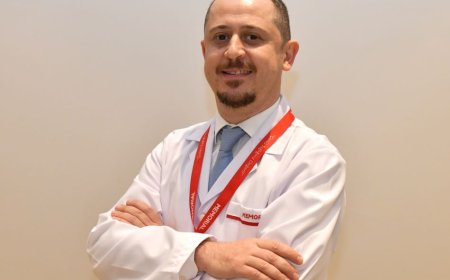
If walking, climbing stairs, sitting cross-legged—or even simply sitting—has become a trial, the culprit may be damage inside the hip joint. One of the most common pathways is cartilage loss due to osteoarthritis, which typically produces groin-centered pain, stiffness, and reduced range of motion. “In the right patients, hip replacement can restore function and quality of life with highly predictable outcomes,” says Orthopedics and Traumatology Specialist Prof. Dr. Necdet Sağlam of Acıbadem Kartal Hospital, noting that modern implants fit with millimetric precision and integrate more smoothly with bone.
Who Is a Candidate—and Is There an Age Limit?
Hip arthroplasty is considered when non-surgical options—medications, physical therapy, gait aids—inadequately control pain or disability. According to Prof. Dr. Sağlam, surgical indications include end-stage joint damage from osteoarthritis, developmental or acquired dysplasia/dislocation, selected inflammatory (rheumatic) diseases, fractures, tumors, infection-related destruction, and avascular necrosis.
There is no strict age cutoff. Decision-making centers on joint condition, functional limitation, and overall health status—not birthdate. While most procedures are performed in middle-aged and older adults, select younger patients with irreversible joint damage may also benefit.
Choosing the Right Implant for the Right Patient
Total hip replacement removes the diseased joint surfaces and substitutes them with a prosthetic ball-and-socket. Implant selection is individualized:
-
Fixation: In younger patients with good bone quality, cementless components that encourage bone in-growth are commonly preferred.


-
Bearing surfaces: Ceramic-on-polyethylene and ceramic-on-ceramic pairings are widely used for their durability and low wear profile.
-
Custom options: In complex anatomy or severe deformity, patient-specific components or augments may be needed.
Advances in biomaterials, along with minimally invasive approaches and robotic/navigation-assisted alignment, have improved implant positioning and longevity. Under optimal conditions—and with patient adherence—today’s implants can last up to 30 years, Prof. Dr. Sağlam emphasizes. Longevity depends on age, activity level, implant quality, and surgical technique.
How Severe Hip Disease Presents
Patients most often report groin pain—sometimes radiating toward the thigh or knee—along with gait disturbance, mechanical “catching,” and progressive stiffness that complicates daily tasks. Some notice limb length discrepancy or limp. These features, especially when persistent despite conservative therapy, warrant orthopedic evaluation.


Recovery: What to Expect After Surgery
Enhanced-recovery protocols aim to mobilize patients the day after surgery. With a walker or crutches, most can take early steps as pain allows. Many transition to independent walking by about four weeks, resuming routine activities sooner than in the past, thanks to refined anesthesia, pain control, and targeted rehabilitation. Your care team will tailor precautions (e.g., avoiding extreme flexion/rotation early on) and progress strengthening of hip and core musculature.
Returning to Sports—With Smart Limits
Activity remains essential after hip replacement; the goal is pain-free, confident movement, not a sedentary life. Prof. Dr. Sağlam notes that, after surgeon clearance:
-
At ~6 weeks: Swimming, stationary/road cycling, and controlled resistance exercises are typically safe.
-
By 3–6 months: Light-to-moderate-intensity recreational activity is reasonable.
-
Ongoing: Avoid high-impact, collision, or fall-prone sports (e.g., football, basketball) that accelerate wear or risk dislocation. Low-impact fitness—walking programs, elliptical trainers, Pilates under guidance—helps protect the new joint.
The Bottom Line
Hip osteoarthritis and other degenerative or structural conditions can drastically erode mobility and independence. For patients whose lives are curtailed by pain despite non-operative measures, modern hip replacement offers durable relief and a return to daily function. With contemporary materials, precision techniques, and guided rehab, many recipients enjoy decades of dependable performance from their implants.
 Like
0
Like
0
 Dislike
0
Dislike
0
 Love
0
Love
0
 Funny
0
Funny
0
 Wow
0
Wow
0
 Sad
0
Sad
0
 Angry
0
Angry
0

Editör | Medicentertv.com, uzman doktorlar, psikologlar ve sağlık profesyonellerinin bilimsel görüşlerini; tıp dünyasındaki yenilikleri, hastane sektöründeki gelişmeleri ve güncel sağlık haberlerini doğru, tarafsız ve güvenilir habercilik anlayışıyla sunar. Uluslararası sağlık haberciliği ilkeleri doğrultusunda, resmî açıklamalar, yeni nesil sağlık uygulamaları ve tıbbi veriler analiz edilerek kamuoyuna aktarılır.
















Comments (0)