



Breast cancer experts discuss robotic surgery and treatments in Istanbul
More than 1,000 scientists from 62 countries met at Breastanbul 2026 to discuss robotic surgery, personalized therapies and breast reconstruction.


By Bilge Türk | MediCenter TV
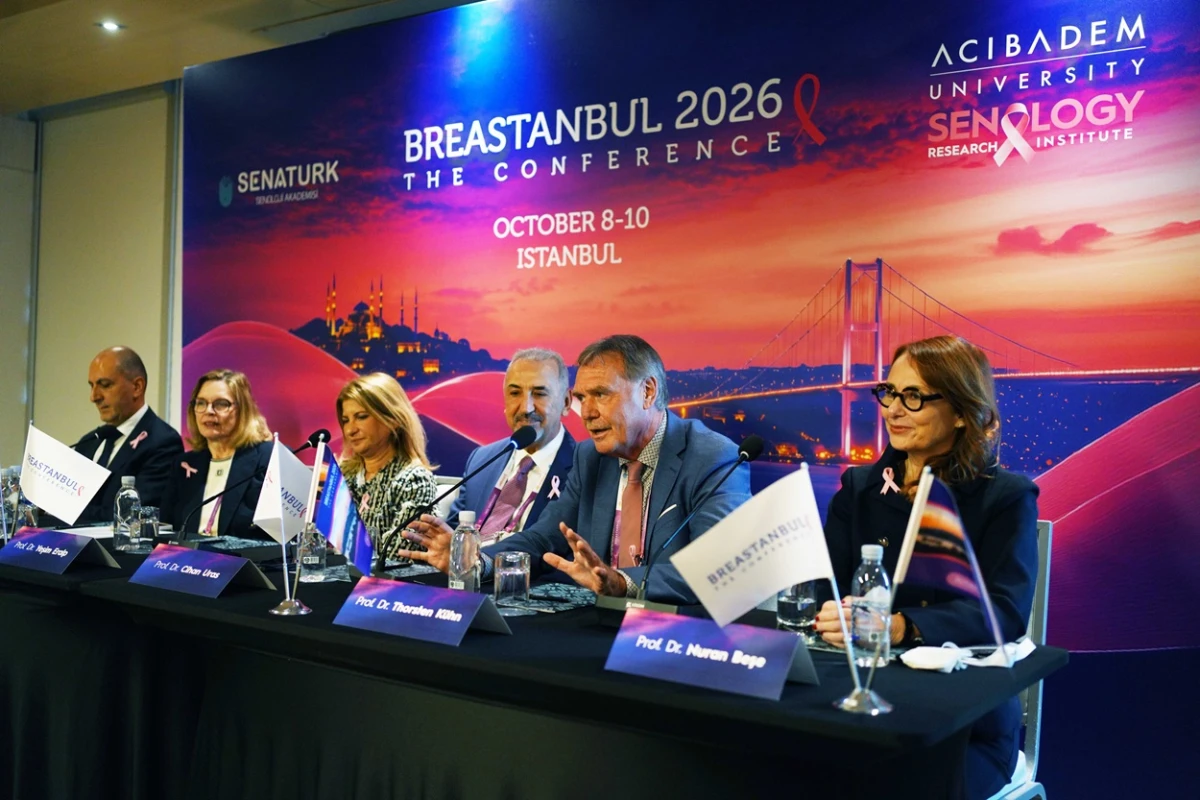
ISTANBUL, Türkiye — More than 1,000 scientists from 62 countries gathered in Istanbul for Breastanbul 2026, where advances in robotic surgery, personalized medicines, radiotherapy and breast reconstruction were presented.
Held from Oct. 8 to 10 with support from the Acıbadem University Institute of Senology and Senatürk, the seventh conference brought together specialists from multiple disciplines involved in breast cancer diagnosis, treatment and patient care.
Among the developments discussed were robotic and endoscopic operations performed through incisions of approximately 3 cm, treatments that may reduce the need for chemotherapy in selected patients and reconstruction techniques using a patient’s own tissue.
The conference included sessions on breast radiology, pathology, surgery, medical oncology, radiation oncology, genetics, plastic surgery and specialized nursing.


Specialists from 62 countries meet in Istanbul
Organizers said more than 1,000 scientists representing 62 countries attended the multidisciplinary event. The conference covered different stages of breast cancer care, from diagnosis and surgery to drug treatment, radiotherapy and reconstruction.
A press briefing was attended by Acıbadem University Institute of Senology Director and general surgeon Prof. Cihan Uras, radiation oncologist Prof. Nuran Beşe, medical oncologist Prof. Yeşim Eralp and plastic, reconstructive and aesthetic surgeon Prof. Şükrü Yazar.
Prof. Thorsten Kühn of Klinikum Esslingen in Germany and Dr. Shawna C. Willey of the Inova Schar Cancer Institute in the United States also took part.
Kühn, a founding figure of the European Breast Cancer Research Association of Surgical Trialists, said Breastanbul provided an important platform for specialists from different countries and disciplines to exchange experience.


He described the conference as a significant scientific meeting where surgeons could discuss research findings and establish new international collaborations.
Breast operations through a 3 cm incision
Conference President Prof. Cihan Uras said robotic and endoscopic technologies were allowing surgeons to perform certain breast cancer operations through smaller incisions.
According to Uras, an incision of approximately 3 cm can be used in eligible patients instead of the larger incision associated with some conventional procedures. He said the entire breast could be removed through this opening during a mastectomy, while lymph node samples could also be collected from the underarm area.
“Robotic and endoscopic methods have allowed us to begin using incisions averaging about 3 cm,” Uras said.
He added that the magnified view and precise dissection provided by these technologies could help surgeons separate tissues more carefully. Uras said the approach may also contribute to reduced bleeding and less postoperative pain.
Robotic or endoscopic breast surgery is not suitable for every patient. The choice of operation depends on factors including the location and size of the tumor, the stage of the disease, breast anatomy, the patient’s general condition and the experience of the surgical team.
The potential advantages and risks must therefore be assessed individually before a treatment plan is approved.
Chemotherapy use declines in selected groups
Medical oncologist Prof. Yeşim Eralp said a better understanding of tumor biology and the development of new medicines had made breast cancer treatment increasingly personalized.
Eralp said immunotherapies had contributed to treatment in both advanced and earlier stages of triple-negative breast cancer, a subtype historically associated with fewer treatment options.
For HER2-positive breast cancer, she said newer targeted medicines could be used before surgery. Some patients receiving these treatments may achieve a pathological complete response, meaning no remaining invasive cancer is detected in tissue examined after surgery.
Eralp also said the use of newer endocrine and targeted medicines had reduced reliance on chemotherapy among some patients with hormone-sensitive breast cancer.
Genomic and molecular tests used in earlier-stage disease can help treatment teams assess whether an individual patient is likely to benefit from chemotherapy. This may allow some patients to avoid treatment that is unlikely to provide a meaningful additional benefit.
The developments do not mean chemotherapy is being abandoned. Decisions depend on the cancer subtype, stage, molecular characteristics and the patient’s overall health.
Treatment burden assessed for each patient
Radiation oncologist Prof. Nuran Beşe said current research was focusing not only on improving treatment effectiveness but also on reducing the burden of treatment for carefully selected patients.
Beşe noted that surgical procedures involving lymph nodes in the underarm area can have lasting effects on quality of life. Researchers are therefore examining whether sentinel lymph node sampling can be omitted in certain low-risk groups.
She said recent studies were also investigating whether radiotherapy to the underarm area could be avoided in some selected patients without compromising disease control.
Beşe emphasized that these approaches were not appropriate for every person diagnosed with breast cancer. Any decision to reduce the extent of surgery or radiotherapy must be based on a detailed assessment by an experienced multidisciplinary team.
Surgeons, radiologists, pathologists, medical oncologists and radiation oncologists need to review the clinical findings together before recommending a less intensive approach.
The objective, she said, is to preserve treatment effectiveness while reducing unnecessary side effects and protecting patients’ long-term quality of life.
Future goal focuses on prevention
Dr. Shawna C. Willey of the Inova Schar Cancer Institute said breast cancer surgery had undergone a major transformation since the 1990s.
As diagnostic and treatment methods became more sophisticated, breast surgery developed into a distinct specialty supported by dedicated training programs, she said.
Willey noted that patients now have access to more advanced surgical procedures and increasingly personalized treatment options. Her long-term goal, however, is to reach a point where breast cancer can be reliably prevented before it develops.
Achieving this would require more accurate methods for estimating an individual’s risk, rather than relying solely on general population statistics.
Such assessments could include genetic characteristics, family history, previous medical findings and other personal risk factors. Willey said improving individualized risk prediction may eventually create more opportunities for prevention.
Reconstruction uses a patient’s own tissue
Plastic, reconstructive and aesthetic surgeon Prof. Şükrü Yazar said advances in reconstruction were also influencing the physical and emotional recovery of breast cancer patients.
A new breast can be created using tissue taken from the patient’s abdomen, back or thigh when this method is medically appropriate. Yazar said three-dimensional imaging, computed tomography and artificial intelligence-assisted planning systems could help surgical teams design a reconstruction that more closely resembles the opposite breast.
The possibility of collecting, processing and preserving a patient’s fat tissue for later use was another subject discussed at the conference.
Yazar noted that scientific debate and research concerning the long-term use of stored fat tissue were continuing. The approach should therefore not be presented as an established option for every patient.
Reconstruction plans depend on the extent of cancer treatment, previous or planned radiotherapy, the availability of suitable donor tissue and the patient’s preferences and general health.
The discussions at Breastanbul 2026 reflected a broader shift in breast cancer care: treatment is increasingly being shaped by the biological characteristics of the tumor and the individual circumstances of each patient.
Experts emphasized that new technologies do not replace careful clinical assessment. Their value depends on appropriate patient selection, experienced medical teams and coordinated decision-making across different specialties.
MediCenterTV.com
 Like
0
Like
0
 Dislike
0
Dislike
0
 Love
0
Love
0
 Funny
0
Funny
0
 Wow
0
Wow
0
 Sad
0
Sad
0
 Angry
0
Angry
0
Bilge Türk, MediCenterTV.com editörü, gazeteci ve yazardır. Sağlık, yaşam, bilim ve güncel gelişmeler üzerine içerikler hazırlayan Türk; doğru, anlaşılır ve toplum yararını gözeten habercilik anlayışıyla sağlık alanındaki gelişmeleri okuyuculara aktarmayı amaçlamaktadır.















Comments (0)