



On World Mental Health Day, Antidepressant Use in Turkey Has Nearly Doubled in a Decade
On World Mental Health Day, İstinye University’s Prof. Dr. Ebru Şalcıoğlu reports that antidepressant use in Turkey has nearly doubled in ten years—driven by pandemic aftershocks and social stressors—and calls for expanding access to evidence-based psychotherapy alongside appropriate medication.



On World Mental Health Day, Antidepressant Use in Turkey Has Nearly Doubled in a Decade
MEDICENTER TV / ISTANBUL
A sharper spotlight on a growing public-health burden
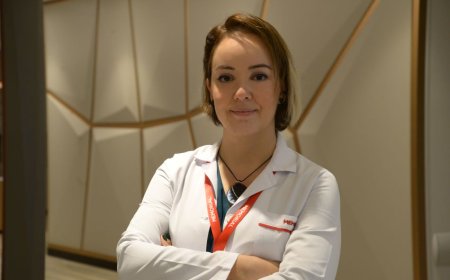
October 10 marks World Mental Health Day, a global call to recognize and respond to mental-health needs. In Turkey, the day arrives with a stark data point: antidepressant use has almost doubled over the past ten years, according to Prof. Dr. Ebru Şalcıoğlu, clinical psychologist and faculty member at İstinye University. “Roughly six in every 100 people use antidepressants today,” she notes, calling the surge “a mirror of the collective strain the society has endured.”
Pandemic aftershocks and uneven access to care
Prof. Şalcıoğlu links the rise to overlapping stressors—pandemic fallout, economic instability, unemployment, migration and natural disasters. These pressures, she says, have both increased mental-health needs and changed how people seek help. While greater awareness may reduce stigma and encourage treatment, structural constraints often push the system toward quick prescriptions rather than comprehensive care. “In time-pressed outpatient visits, medication can become the fastest intervention. Many people reach a prescription—but not therapy,” she explains. The professor also warns that some individuals self-start or continue medications without evaluation, a trend that can leave official figures underestimating real-world use.
Who uses antidepressants? Gender, age and city patterns
The profile of antidepressant users is uneven across demographics:
-
Women receive about 70% of prescriptions, meaning seven of every ten antidepressant users are women. Whether this reflects higher prevalence or greater help-seeking among women remains debated.


-
Use is most common after age 35, especially between 36–50, though uptake among younger people is rising, signaling growing vulnerabilities in youth.
-
Large metropolitan areas show higher per-capita consumption. In parts of western and central Anatolia, per-capita use can reach twice that of other provinces—an imbalance likely tied to urban stressors and differences in service availability.
Post-2020 acceleration—and the risks of mis-use
Following 2020, per-capita antidepressant consumption rose about 25% within two years, Prof. Şalcıoğlu says, even as psychiatry-authored prescriptions declined—a signal that more people may be using medication without medical supervision. She cautions that inappropriate or unnecessary use carries risks: sleep disturbance, weight change, sexual side effects, gastrointestinal complaints, and discontinuation syndromes if stopped abruptly. Psychologically, relying on medication alone can erode coping skills and delay durable solutions like therapy or needed life changes. At the societal level, an overreliance on fast pharmacological fixes can obscure underlying socio-economic drivers of distress.
How Turkey compares—and why “lower” doesn’t always mean “better”
Although Turkey’s usage has risen, it still lags behind many European countries on per-capita measures. Prof. Şalcıoğlu cautions against simplistic interpretations. Lower usage does not necessarily signal better population mental health; it may also reflect limited access to psychotherapy and psychiatric services. In many Western countries, evidence-based psychotherapy is more accessible, reducing the need to default to medication alone.


What a balanced, evidence-based response looks like
Prof. Şalcıoğlu argues for prevention and access in tandem:
-
Upstream investments: emotional-literacy programs in schools, community initiatives that strengthen social ties, and policies that mitigate economic insecurity.
-
Scaling proven care: integrate evidence-based psychotherapies—such as cognitive-behavioral therapy—into the public health system, and train frontline staff in brief, structured interventions that fit real-world clinics.
-
Workforce leverage: with more than 100,000 psychology graduates nationwide, Turkey has a talent pool to expand early identification, stepped-care models and community outreach.
-
Right care, right timing: medication remains vital and often life-saving for many; the key is accurate diagnosis, regular follow-up, and combining pharmacotherapy with psychotherapy when indicated.
“Medication can be essential,” Prof. Şalcıoğlu emphasizes. “But its benefits depend on individualized assessment, consistent monitoring, and the availability of scientifically grounded psychotherapies. The goal is to shift from a medication-centric system to a recovery-oriented model.”
 Like
0
Like
0
 Dislike
0
Dislike
0
 Love
0
Love
0
 Funny
0
Funny
0
 Wow
0
Wow
0
 Sad
0
Sad
0
 Angry
0
Angry
0

Editör | Medicentertv.com, uzman doktorlar, psikologlar ve sağlık profesyonellerinin bilimsel görüşlerini; tıp dünyasındaki yenilikleri, hastane sektöründeki gelişmeleri ve güncel sağlık haberlerini doğru, tarafsız ve güvenilir habercilik anlayışıyla sunar. Uluslararası sağlık haberciliği ilkeleri doğrultusunda, resmî açıklamalar, yeni nesil sağlık uygulamaları ve tıbbi veriler analiz edilerek kamuoyuna aktarılır.















Comments (0)